Tuesday, June 12, 2007

That's a Stretch

William Howard Taft was born September 15, 1857, to proud parents Louisa Torrey and Alphonso Taft, in Cincinnati, Ohio. He would eventually be elected the 27th President of the United States and would serve one term, 1909-1913. George Washington, Abraham Lincoln, and many other Presidents are remembered for their tremendous accomplishments. President Taft, however, is probably remembered most for his weight. Weighing over 350 pounds, he is easily the heaviest President in the history of the United States. In fact, President Taft became stuck in the White House tub so frequently, that a new, custom-built tub large enough to fit the six men who installed it replaced the smaller, problematic tub.
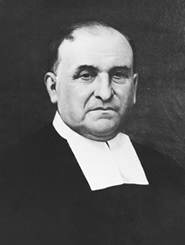
Brother Jasper of Mary, F.S.C was working at Manhattan College in the late 1800s. He may not look like a particularly happy man, but he is credited for introducing the game of baseball to the college—so he can’t be too bad. He became the baseball squad’s first coach, and today, all sports teams at Manhattan College are called the Jaspers. I guess you could say he’s now the school mascot.

If you’re wondering why this post is providing superficial history lessons on two seemingly unrelated figures, you may also be wondering what these two have to do with baseball and The Perfect Game. Or, if you’re like me, you may just be reading and not really retaining anything and by the time you reach the point that you realize you have no idea what you’ve just read, you’ll go back to the top, and start over. Feel free to do so.

April 14th, 1910 was Opening Day for the Washington Senators. President Taft was in attendance that day and is credited for being the first U.S. President to throw out the first pitch. There is no record of how well the pitch was thrown, but I suspect that had he embarrassed himself that afternoon, other Presidents would not have sought the opportunity of continuing the tradition. After the first pitch, he settled in for what became a long, slow contest between the Senators and the Philadelphia Athletics. The game continued to drag and the small, wooden seats at the ballpark became increasingly uncomfortable for the obese dignitary. According to reports, by the middle of the seventh inning, the President couldn’t handle the pain and discomfort any longer and he stood up. Back then, the general public revered the President of the United States, and as was customary, when everyone in attendance noticed that he had risen, they thought that he was getting up to leave, so the crowd also rose from their seats out of respect. After a few minutes, President Taft returned to his seat, the game continued, and another baseball tradition had been born: The Seventh Inning Stretch. One person establishing two long-standing traditions in one day is pretty impressive.

But wait… Manhattan College begs to differ. It was their historical figure, Brother Jasper, who initiated the Seventh Inning Stretch.

This particular story traces the origin of the Seventh Inning Stretch to an exhibition game between Manhattan College and a semi-pro team called the Metropolitans. (Hmm. Metropolitans…That has a nice ring to it, but it’s a little long…Oh! I know! What if we shorten the name to the Mets…Now there’s an idea.) Anyhow, that day, Brother Jasper noticed the Manhattan students were getting restless as his team was coming to bat in the seventh inning, and we all know what can happen when college students get restless. So, in an attempt to stem the tide of unruly fans, Brother Jasper called time-out and instructed the students to stand and stretch for a few minutes until the game resumed. This Seventh Inning Stretch spread to the major leagues because the college played exhibition games against the New York Giants each year. And now, every major league ballpark in the county participates in the Manhattan College stretch.

That's a good story too, but, baseball historians have uncovered a letter home from Harry Wright, a player for the Cincinnati Red Stockings (Red Stockings? Hmm. That’s catchy too—a little cumbersome though. What about this—Red Socks? Huh? Nah, it would probably never stick). Wright wrote home in 1869, which easily pre-dates both the Taft and Jasper accounts, and described what seems to be a Seventh Inning Stretch.

“The (Cincinnati) spectators all arise between halves of the seventh inning, extend their legs and arms, and sometimes walk about.” (http://www.baseball-almanac.com/articles/7th_inning_stretch.shtml)

The real question is which story is true.

It doesn’t really matter, does it? Whatever the origin, kids and adults alike, at ballparks and stadiums all across the county look forward to the Seventh Inning Stretch. Everyone stands, stretches, and sings “Take Me Out to the Ballgame.” There are few things better than swaying back and forth with good friends and family, singing that song and substituting “…root, root, root, for the home team” with “root, root, root for the Royals” or the Bees, or the Trappers, or the Jaspers, or whatever your home team is, and then settling back in, grabbing your scorecard and a pencil and taking in the last 15 outs of the game.

Tuesday, June 5, 2007

By the Numbers

I was 10 years old the first time I can remember choosing my number. At the time, it felt like I had hit the big time. I was playing on my cousin's fall ball team, which, since he was in the "majors" and I was just finishing two years of "minor B," seemed like I had been given a chance to prove myself on a bigger stage. I saw it as an extended tryout. Maybe the bright yellow t-shirts with tropical screen-prints on the front and our names and numbers on the back should have been a clue—it probably wasn't quite the big break I had been hoping for. But at the time, you couldn’t have convinced me otherwise. After all, in minor B my number was given to me according to my t-shirt size—the smaller the shirt, the smaller the number. I think I was #2. But, now I had been given the opportunity to choose my number. So what number does an up-and-coming, not-so-soon-to-be high school state championship role player choose in 1989 at 10 years old? 33, of course.

To explain this pick, I must make a devastating disclosure. And, if any of you choose never to return to this blog again, I will not hold it against you. I am ashamed to say it now, but in my youth, my baseball idol was… Jose Canseco. Maybe you’ve heard of him. He’s the author of the controversial expose on steroids in baseball, Juiced: Wild Times, Rampant 'Roids, Smash Hits, and How Baseball Got Big. Needless to say, now that I’m older and a little wiser than my 10 year-old self, I can understand why my first hitting coach cringed when I answered that my favorite player was Canseco. But at the time, I thought he was crazy. I mean, at the time, the guy was the only person in the history of the game to hit 40+ homeruns and steal 40+ bases in a single season.

Either I moved on from Canseco, or I didn’t hit well with the number 33 on my back. Whatever the reason, the next time I was allowed to choose my number I chose the number 2. I guess I had just grown comfortable with that number. It didn’t take long, however, before I discovered a new idol, one worthy of admiration: Roberto Clemente. I wished that I could add a 1 after my 2 so that I could be 21, just like him. Unfortunately, I was stuck with 2 for a few years. Then, when I was 12 years old, it was looking like I was going to make the all-star team, but only because there was an A-team, and a B-team (I made the B-team). What my number was going to be became a healthy recess discussion with my elementary school buddies. We decided on 18, though I don’t remember why. The next season brought another B-team All-Star opportunity and I decided on 51. Ichiro and Randy Johnson are notable 51s, but I didn’t know that at the time. When I made the choice, it was because of a pitcher that was two years older than me that I “looked up to.” Had I known that he would “pants” me at my locker (which was right next to the sophomore cheerleaders) between classes my sophomore year, I probably wouldn’t have thought so highly of him. Anyway, his number was 15, but since he was left-handed, I used the opposite, 51.

When I finally cracked the A-team, I was given #1. I didn’t get to choose because they had the jerseys pre-made. The regulars got the numbers they’d always had, but I was a last-minute decision. Just happy to be there, I took what they gave me.

By the time I made the high school team I had settled on 16. A teammate, and one that was a little more productive that me, had claimed 15 years ago, so I took 16. It grew on me and the best part was, I never had to complete for that number. It was waiting for me again in junior college.

If you’ve ever played organized sports, then you probably understand how important a number can be. Growing up, everyone wanted the #23 basketball jersey because, thanks in part to Gatorade, everyone wanted to be like Mike. But, there was a time in baseball when players didn’t have numbers.

According to the National Baseball Hall of Fame, numbers on the backs of players’ jerseys became permanent for the first time in 1929. The Cleveland Indians were the first to do so on April 16, and the New York Yankees jumped on the bandwagon two days later. While the Indians only used the numbers on their home jerseys, the Yankees were the first to put numbers on both the home and away uniforms. Speaking of the Yankees, I have been asked to post about how they are the “best professional sports team of all-time.” But, it will have to wait until they can at least pull themselves up to, I don’t know, at least five games over .500, unless you think that’s too much to ask.

But I digress…

Originally, numbers were assigned to players according to their position in the batting order, which is why Babe Ruth was number 3, and Lou Gehrig was number 4.

Prior to 1929, some teams had tried to implement numbers, but the players didn’t really like them. The fans seemed to enjoy the identifiers, but apparently, the players’ felt the numbers made them look like prison inmates. Funny…prison serial numbers might actually work in the NFL.

Friday, May 25, 2007

Scratch That One

Have you ever been watching a major league baseball game and wondered why the catcher gives so many balls back to the umpire, who then throws it out? Every time a pitch is thrown in the dirt, the catcher turns and hands the ball over to the home plate umpire. More often than not, after a brief examination, the umpire will then roll the ball back to the home team’s dugout where an eager ball boy scoops it up and officially retires it from the game. If you haven’t ever noticed this, watch a game this weekend. It’s more noticeable if you actually go to the ballpark because television cameras usually focus on whatever the announcers are discussing between pitches rather than the minutiae of the game. The reason is so that the pitcher cannot gain an advantage with a scuffed or scratched ball.

Back in the good ol’ days, some pitchers would actually take razors, tacks, sandpaper, or anything else they could smuggle out to the mound to scrape and scuff the baseball. Why? It’s basically simple physics.

If you’re looking for an interesting book to read and you are not bored by the finer points of either baseball or scientific study, I recommend Robert K. Adair’s text, The Physics of Baseball. Here, he described the possible result of pitching with an illegally modified ball that has been scuffed on one side:

Scarring or scuffing the ball can produce asymmetric forces on the ball that result in aberrant trajectories. Since it is probably impractical to scuff or scrape the surface of the ball so that the imperfection has as dominant an effect as the stitching, it might seem that such modifications cannot be very important, and that is largely the case for casual throws. But the highly skilled pitcher can throw the ball so that the effect of the stitches is symmetric, but if the ball is scuffed on one axis – and not on the other – unbalanced forces can be realized, which act only in one direction…Properly thrown, the scuffed left-hand side of the ball could induce low-resistance turbulence in the air passing by while the air will pass the smooth right-hand side in high-resistance smooth flow and the ball will veer to the left – toward the scuffed area! Since a deviation of a fraction of an inch can change a home run into a pop fly or a double-play ground ball, the controlled deviations a skilled pitcher can induce by disfiguring the ball are important (p. 40-41).

So, since Major League Baseball has cracked down on illegally modifying a baseball, the only hope for a pitcher who wishes to pitch with the advantages of a scuffed ball is for the scuff to come during regular game play, which is why so many baseballs are thrown out by the umpire – that, and there is enough money to go through 50-60 balls a game.

Thursday, May 10, 2007

Take Me Out to the Ball Game

Not growing up in an area where a major league ballpark was readily accessible, my memories of going to ballgames as a kid are of the Salt Lake Trappers. I loved the Trappers. Back then, the Pioneer League seemed like it was so important. It didn’t matter that the league was on the lowest rung of minor league baseball. I always knew where the Trappers stood in the standings. I remember the season they won 29 straight games. I remember promotional give-aways like the mini wood bats, and the navy blue plastic helmet with a Trapper logo and the removable brown “head-sizer thing.” Then there was my Trappers hat that blew off my head one day while riding the Heber Creeper, never to be seen again. Some of my greatest baseball memories are of sitting on those old bleacher-style benches on a warm summer night in the nostalgic glow of the lights; (lighting like that can only be found at the parks of small-town minor league teams) or watching foul balls fly over our heads and out of the stadium, and thinking how great it would be to spend a game just outside the park collecting real game balls. I remember the huge Tiger’s Blood sno-cones, peanuts, and Red Vines. It was at a Trappers game where it first occurred to me that I could bite the ends off of a piece of licorice and use it as a straw for my Sprite. I also remember standing and singing Take Me Out to the Ballgame during the seventh-inning stretch with my family, just happy to be at the ballpark, watching my team.

The Trappers were only around for eight seasons. After the 1992 season, Salt Lake City tore down the old Dirk’s Field and built and brand new ballpark which came with a brand new AAA minor league team, just a step below the big leagues. Somehow I never quite seemed to care as much about the Buzz, or the Stingers. When the team’s name changed again before the 2006 season to the Salt Lake Bees, my wife and I went to a few dozen games and felt a small connection, but it was never quite as magical as it had been with the Trappers.

Now we are in Kansas City and the Royals are our team and I found some of that magic at the first game I attended. I had been to a few major league games in the past. I saw the Rockies in Denver during their inaugural season. I saw the Oakland Athletics and the Baltimore Orioles during one trip to California, and the Anaheim Angels during another. I even had the chance to see Roger Clemens pitch for the Houston Astros against the Chicago Cubs at Wrigley Field. But, none of these experiences stirred the boy inside me like my first trip to Kauffman Stadium in Kansas City. For whatever reason that nostalgic feeling came back to me.

That’s one of the reasons why baseball is such a great game. It’s not just a game, it’s an experience. It’s following your team and reading the box scores. It’s taking in a few hotdogs, some soda, nachos, a few scoops of ice cream, and maybe a pile of chili-cheese tots. In other words, an entire month’s worth of junk food in one night. It’s taking your glove to a game just in case a ball comes your way; showing up extra early to see the visiting team take batting practice; and staying late to wait for an autograph from the guy who slugged two home runs for your team that night.

When you are young, you might not understand everything that goes on in the field, but you will remember those muggy nights at the ballpark. You will remember your dad coming back to your seats balancing roughly 13,000 calories in a small drink tray, and how great it all tasted. You may even remember how mythical your team’s heroes seem. But most importantly, you will remember the magic in the air. And if you’re lucky enough, you’ll be able to capture that again later in life.

Tuesday, May 1, 2007

A Perfect Game

A few people have asked about my blog's name, The Perfect Game. Baseball-savvy individuals that find this blog will hopefully appreciate the name's double meaning, especially coupled with the blog's web address (http://27up27out.blogspot.com). For me, at least, Baseball is the perfect game. There is no other sport that can captivate me as baseball can. But, perhaps I will expound on its overall perfection in a future post. For now, the topic is a perfect game—nine innings of determination, stamina, and most times, a little luck.


There are many feats for which a pitcher strives. A complete game, for example is when a single pitcher is able to throw each inning of the game. This doesn't happen as much as it did in the old days, before the baseball world became obsessed with pitch counts. Now, to throw a complete game, a pitcher not only needs to get guys out, but do it efficiently with as few pitches as possible. Additionally, the prevalence of dominant (or at least, hard-throwing) closers who usually come into a game in the ninth inning to get the final three outs, and the likelihood of throwing a complete game diminishes even more. On top of that, if there's an ace on the mound, throwing really well, keeping his pitch count down, but his team is ahead by so many runs that the opposing team has no real chance of winning, the ace will usually be rested and the manager will call upon the bullpen in 8th inning or so. Yeah, complete games are not as common as they used to be.

A shutout is a pitching accomplishment which entails holding the opponents scoreless for the entire game. A shutout, unlike like a complete game, doesn't need to be thrown by just one pitcher. When it is, it is referred to as a "complete game shutout." But, just like complete games, shutouts are also hard to come by. In today's world of bigger players, harder throwers, and longer homeruns, even the Kansas City Royals, one of the most futile teams in recent history, are averaging over three runs a game, and have only been shutout once in 28 games so far.

The next step up from the shutout, and holding the opponent scoreless is holding them hitless. No-hitters (a complete game without giving up a hit) are rare as well. In the history of the game, there have only been 234 no-hitters. Most no-no's (that's "baseball talk" for a no-hitter) are thrown by just one pitcher, though on rare occasion, multiple pitchers may combine for nine innings if no-hit ball. The Houston Astros, for example, set a Major League record on June 11, 2003 by sending six different pitchers to the mound at Yankee Stadium, none of whom allowed a single hit. The most recent no-hitter was thrown by White Sox pitcher Mark Buehrle when he threw against the Texas Rangers April 18, 2007. It was the first no-hitter in the American League since Derek Lowe’s no-no for the Boston Red Sox in a 10-0 win against the Tampa Bay Devil Rays in 2002.

Shutouts are sweet. Complete game shutouts are even better. A no-hitter is dream come true for any pitcher. But the perfect game is something all together magical.

Simply put, a perfect game is a complete game in which no opposing player ever reaches base safely—27 up, 27 out. How rare is a perfect game? Only 17 pitchers have tossed perfect games in Major League history. If you give up a hit, it's gone, and so is your no-no by the way. As if throwing a no-hitter isn't hard enough, throw four pitches out of the strike zone to one batter, and away walks your bid for perfection. If your sinker runs too far inside and hits a batter, you're not perfect enough. Literally, no one must reach base—not even on an error by the young shortstop that was just called up from AAA. If you're lucky enough to be perfect on the mound, it is something you will never forget, nor will anyone in attendance that day.

A perfect game is one of those achievements that have the ability to immortalize an athlete. It is as rare as a hole in one, maybe even more so; because unlike a hole in one, a pitcher can't get lucky one time and throw a perfect game. He must go out and pitch to the best baseball players in the world inning after inning. A pitcher relying on luck will soon find that it runs out at the most inopportune moments.

Another aspect of a perfect game is how important the eight other men on the field become. No one is going to strike out 27 batters, so the defense must come up with play, after play, after play. The pitcher is the player who goes down in the history books, but the credit should somehow go to the entire team. The most recent perfect game in the majors was thrown by Randy Johnson, then with the Arizona Diamondbacks, on May 18, 2004, against the Atlanta Braves. MLB.com has incredible footage of all 27 outs that day at the above link. Notice how close the first batter comes to ruining Johnson’s perfect day before anyone even imagines it could happen. If it weren’t for a tremendous play by the first baseman, the lead-off man is on base and it’s just another day at the ballpark.

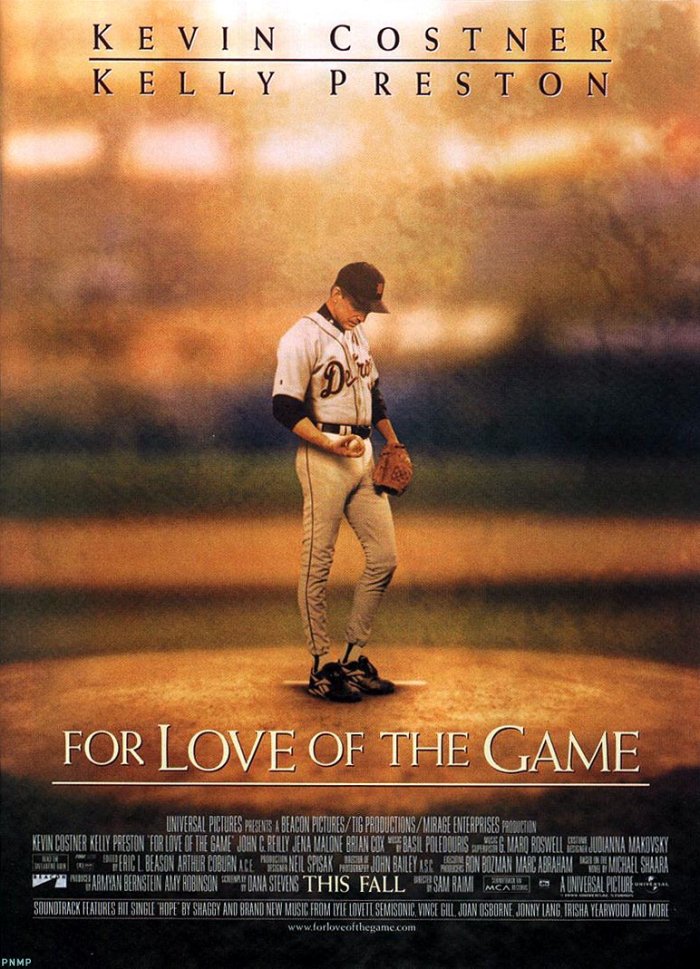
For Love of the Game (1999) is a great baseball movie that follows fictional aging ace Billy Chapel (Kevin Costner) in his quest for a perfect game on what could be the final game of his career. This show does a great job of showing all of the drama of a perfect game while reminding us that it doesn’t happen like the Randy Johnson clip of out after out. The pitcher has plenty of time to sit and think while his team bats each inning, which only adds to the difficulty of a perfect game. It also brings up one extremely important facet of a perfect game that everyone should know—don’t jinx it!

I don’t care if you’re watching a professional baseball game, a college game, a high school game, or your 8-year-old nephew’s little league game—if you suddenly realize that not only has the pitcher not given up a hit, but you can’t remember any baserunners at all, don’t say it out loud! I can’t stress this enough. For your own health it is important that you remember this rule. Don’t ask someone about it. Don’t mention it to the pitcher’s proud father. Don’t even think about it. Just pretend it’s not happening and that there’s nothing special going on. If you hear someone less savvy than you, quickly silence them by any means possible, and inform them of this all-important rule. If you talk of the perfect game while it’s in progress you will jinx it and something will happen to ruin it. I am convinced that part of the reason there have only been 17 perfect games in the history of the Major Leagues is because there are too many people who don’t know this rule. Everyone on the field is knows it, and abides by it, but some drunk in the upperdeck who can’t keep his mouth shut ruins it and before you know it, the pitcher, who had been so perfect, loses his bid on an infield single or a “judy” just out of the reach of the second baseman. If we can work together and get this message out to everyone that sees a baseball game, I believe we can double the number of perfect games thrown in the Major Leagues in just five years. After all, if Kevin Costner can do it, why can’t Johan Santana or Roy Halladay?

Then again, maybe it’s good that perfect pitching is so rare. There are so many everyday achievements in baseball that are considered great or incredible, that the game needs something so unique, so incomparable, and so extraordinary that there’s only one word adequate to describe it—perfect.